Page Contents
Guarana Review: Caffeine Content and Cognitive Research
Guarana (Paullinia cupana) contains caffeine and is used in energy and nootropic products. Its botanical origin does not make its caffeine safer, and its extract weight does not reveal the caffeine dose unless the composition is specified. Evidence for additional cognitive effects is interesting but limited.
Guarana milligrams are not caffeine milligrams
A seed powder, a concentrated extract and a standardized extract can contain different amounts of caffeine. An extract ratio alone is not enough to calculate caffeine exposure. The relevant label information is the declared caffeine amount and all other caffeine sources in the serving.
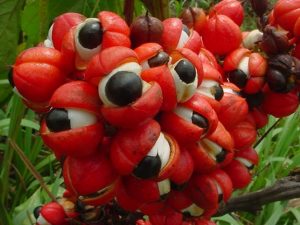
The archive’s eye-like fruit imagery is botanical context, not evidence of a cognitive effect. Likewise, a natural-source label does not alter caffeine’s potential effects on sleep, anxiety or heart rate.

Human trials are small and task-specific
A double-blind multi-dose study tested acute effects of guarana on cognition and mood. It supports further investigation but does not establish a universal optimal dose, lasting benefit or superiority to coffee. Different tasks and amounts did not necessarily produce the same pattern.
The archive also described a small guarana/ginseng experiment. When a study includes combinations, each comparison must be interpreted separately. A low measured caffeine amount can raise the question of other active constituents, but it does not by itself prove a caffeine-independent mechanism.

Animal stimulation is not human enhancement
The original review used a planarian experiment to discuss stimulation beyond caffeine. Movement or convulsive responses in a flatworm cannot establish better human attention, safe energy or a clinically useful synergy. That experiment belongs in preclinical context only.
Longer-term research has not established the broad daily cognition claims implied by a positive acute test. A person noticing a lift from a blend also cannot know whether it came from guarana, added caffeine or another ingredient.
A practical label-first assessment
Count guarana-derived caffeine together with coffee, tea, energy drinks and other supplements. FDA’s 400 mg-per-day discussion applies to most adults as a general safety reference, not a target or a guarantee for every person. Sensitive users can experience unwanted effects at lower amounts.
The previous recommendation to start with a fixed guarana amount and escalate is removed because caffeine content varies. No single extract dose is a universal cognitive regimen. Guarana may provide stimulation through caffeine, but the evidence reviewed here does not justify the archive’s verdict that it is categorically better than coffee or a necessary nootropic.

Illustrations from the original article

Sources and further reading
- Primary acute multi-dose guarana cognition/mood trial.
- Long-term guarana study in healthy older volunteers; distinguishes chronic claims.
- Total caffeine and individual sensitivity context.
Related reading
- Is Caffeine a Nootropic? Attention Benefits and Trade-Offs
- Panax Ginseng Review: Cognition, Fatigue and Extract Differences
Nootropic Geek is an affiliate publishing brand. This ingredient review is an editorial assessment of published evidence, not a clinical consultation or a claim of hands-on product testing. About Nootropic Geek.