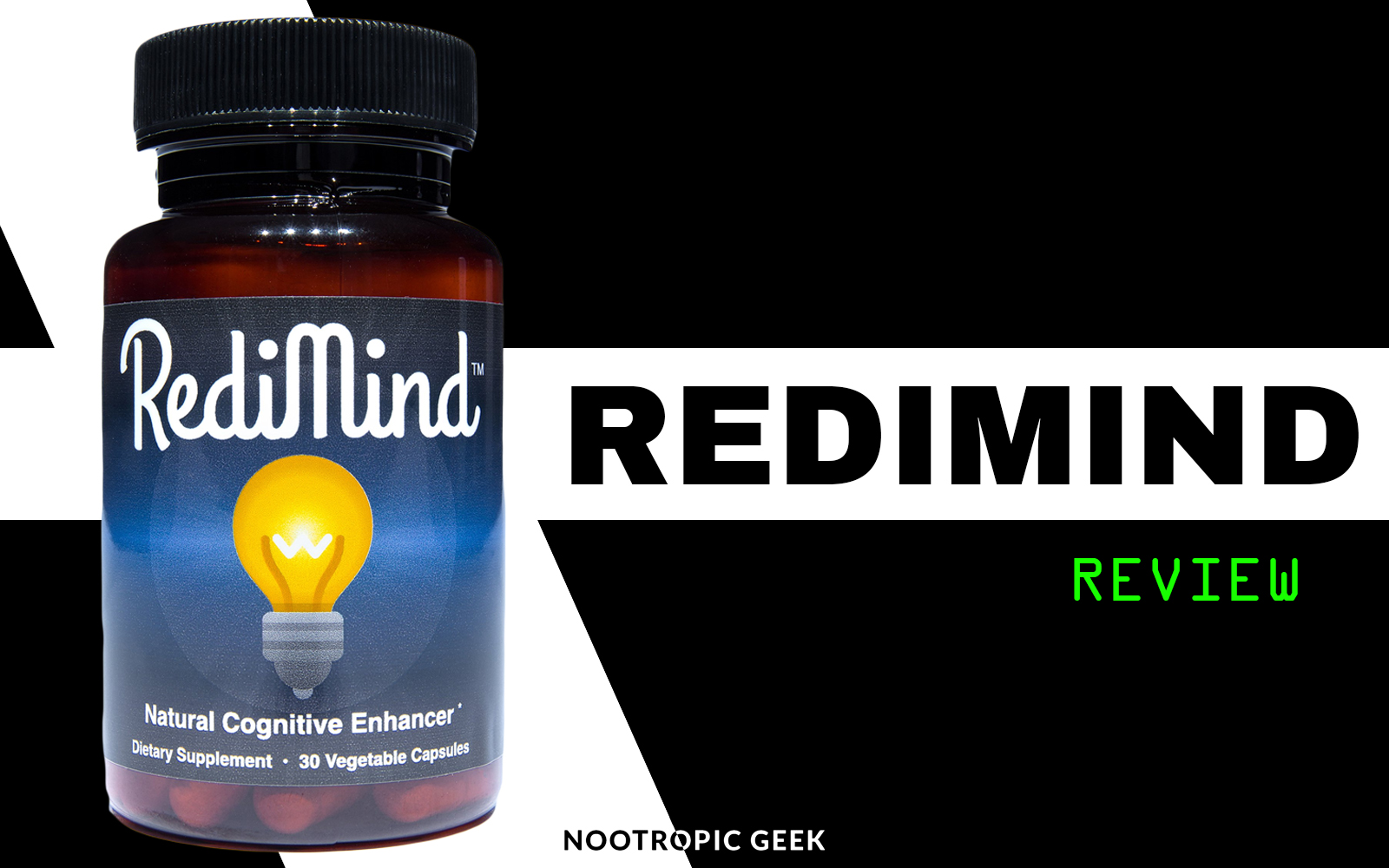
RediMind is marketed by Nutreance for memory and cognitive performance. The current manufacturer page makes clinical claims, but those claims need study-level assessment rather than repetition as an editorial conclusion.
Page Contents
Formula recorded in the original review
The following table is retained as an archival record, not a verified current label or dosing recommendation. Match a present bottle to its own label; a changed or unavailable source does not establish that a product is discontinued.
RediMind Ingredients | |
| Ingredients | Amount Per Serving |
| RediMind Proprietary Blend | 350mg |
| Bacopa Monnieri Powder, Ginkgo Biloba Powder, Alpha GPC 50%, Lion’s Mane Powder, Huperzine A | |
The archived blend
The original panel lists a 350 mg proprietary blend containing bacopa, ginkgo, alpha-GPC, lion’s mane and huperzine A. Individual quantities are not disclosed in that record. The total does not show how much of a particular extract or active compound is present.
Alpha-GPC 50% describes an ingredient specification, not 50% of the whole product. Similarly, the presence of huperzine A cannot be evaluated by assuming it shares the blend mass equally with the other components.
Reading the clinical language
A manufacturer claim of clinically proven memory enhancement should lead to the original trial: who participated, how many people completed it, what comparison was used and what outcome was prespecified? A percentage improvement needs its denominator and absolute context.
This revision does not certify the manufacturer’s trial claims or claim no research exists. It distinguishes a claim found on the product page from an independently evaluated conclusion about everyday benefit.
Avoid diagnosing from marketing
Ordinary lapses should not automatically be placed into a staged decline narrative. Progressive or functionally significant memory problems deserve assessment, not a fear-based purchase. Ingredient mechanisms cannot establish prevention of dementia.
Current product identity was verified, but the archived numerical panel was not re-established as a complete present label. Check the bottle and ask for undisclosed quantities if they are needed for an interaction assessment.
Conclusion
The central limitation is transparency and the need to appraise the actual finished-product evidence. Neither a proprietary blend nor a clinical-sounding headline settles effectiveness. See memory outcomes for how to distinguish test performance from daily remembering.