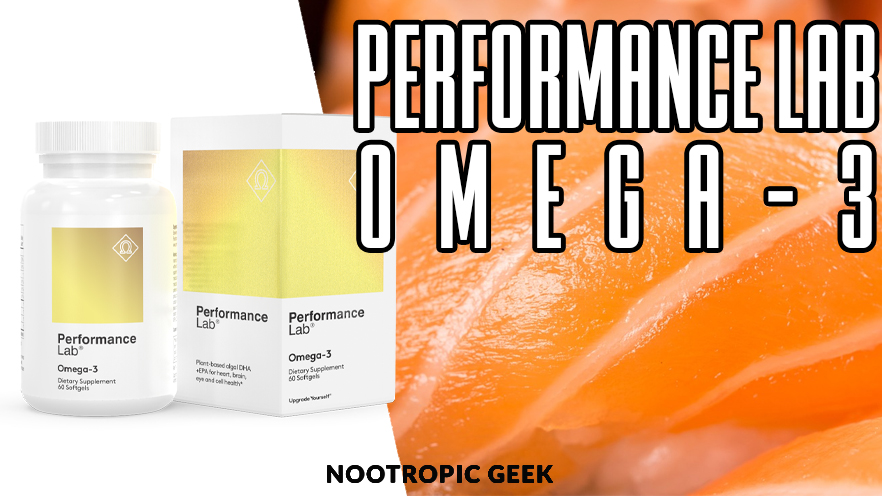
Performance Lab Omega-3 is an algae-sourced omega-3 product. The manufacturer now identifies a v2 version and a three-softgel serving, so the earlier review’s numerical panel should not be assumed to describe every current bottle.
Page Contents
Formula recorded in the original review
The following table is retained as an archival record, not a verified current label or dosing recommendation. Match a present bottle to its own label; a changed or unavailable source does not establish that a product is discontinued.
Performance Lab Omega-3 Ingredients | |
| Ingredients | Amount Per Serving |
| Calories | 20 |
| Total Fat | 2 g (3% DV) |
| Saturated Fat | 0.5 g (<1% DV) |
| Trans Fat | 0g |
| Cholesterol | 2 mg (<1% DV) |
| Sodium | 1 mg (<1% DV) |
| Total Carbohydrate | 1 g (<1% DV) |
| Algal Oil (from life’s™ OMEGA 60) | 2000 mg |
| Total Omega-3 Fatty Acids | 1100 mg |
| DHA (Docosahexaenoic Acid) | 600 mg |
| EPA (Eicosapentaenoic Acid) | 300 mg |
Oil mass is not EPA plus DHA
The archived table distinguishes total algal oil, total omega-3 fatty acids, DHA and EPA. These entries are not interchangeable. Cost comparisons should use the relevant EPA/DHA quantities for the actual serving, not simply the largest oil number on the front.
The current manufacturer page describes a 2:1 DHA:EPA ratio, but the complete current quantitative panel was not available in the retrieved text. This review therefore preserves the older numbers explicitly as an archive rather than reconstructing missing amounts.
Algae source versus cognitive outcome
An algae source can matter to a person’s dietary preferences. It does not by itself establish cognitive improvement, brain repair or freedom from all quality concerns. Look for product-specific quality documentation and the current capsule ingredients.
NCCIH distinguishes different omega-3 research questions. A dietary role, clinical use or association with health does not mean this product has been proven to enhance cognition in all healthy adults.
What the previous verdict overstated
The old neuro-repair language and personal benefit narrative are withdrawn. A fatty acid’s presence in neural tissue does not demonstrate that taking more repairs damage. Combining the product with Performance Lab Mind also is not a proven requirement.
Review medicines and total supplemental intake where relevant. A fish-free source is not a substitute for assessing individual suitability.
Conclusion
This is a useful product to compare when the specific goal is algae-derived EPA and DHA. A current bottle panel is needed to complete the numerical value comparison. The review does not certify a universal brain-health benefit, a best ratio for everyone or current pricing.