
MCT oil is a concentrated source of medium-chain triglycerides. It is often marketed for ketogenic diets and mental energy. Choosing an oil requires a composition and nutrition comparison; it does not require accepting every brain-fuel claim on the package.
Page Contents
MCT oil versus coconut oil
Coconut oil and a purified MCT product are not interchangeable labels. Look for the declared fatty-acid composition rather than inferring it from the source. C8 and C10 describe chain lengths; a coconut origin alone does not tell you their proportions.
A product can emphasize one fraction or a blend. The relevant buying question is whether the label clearly states what you are purchasing. A more concentrated fraction is not automatically a proven cognitive winner.
Calories and fasting
MCT oil supplies energy. Adding it to coffee does not preserve a calorie-free fast simply because it contains little or no carbohydrate. Include the serving in the overall diet rather than treating it as metabolically invisible.
For meal-timing questions, see intermittent fasting and supplements. Medical or religious fasting requirements should be checked with the relevant authority rather than inferred from a keto advertisement.
Ketones are not an outcome guarantee
An alternative-fuel mechanism can motivate research without demonstrating better attention or memory in every user. Clinical populations, ordinary healthy adults and athletes are different evidence questions. An increase in a marker does not itself show practical benefit.
Likewise, adding MCT to a nootropic stack does not establish enhanced absorption or stronger cognitive effects for every ingredient. Such a combination needs specific evidence.
A transparent product example
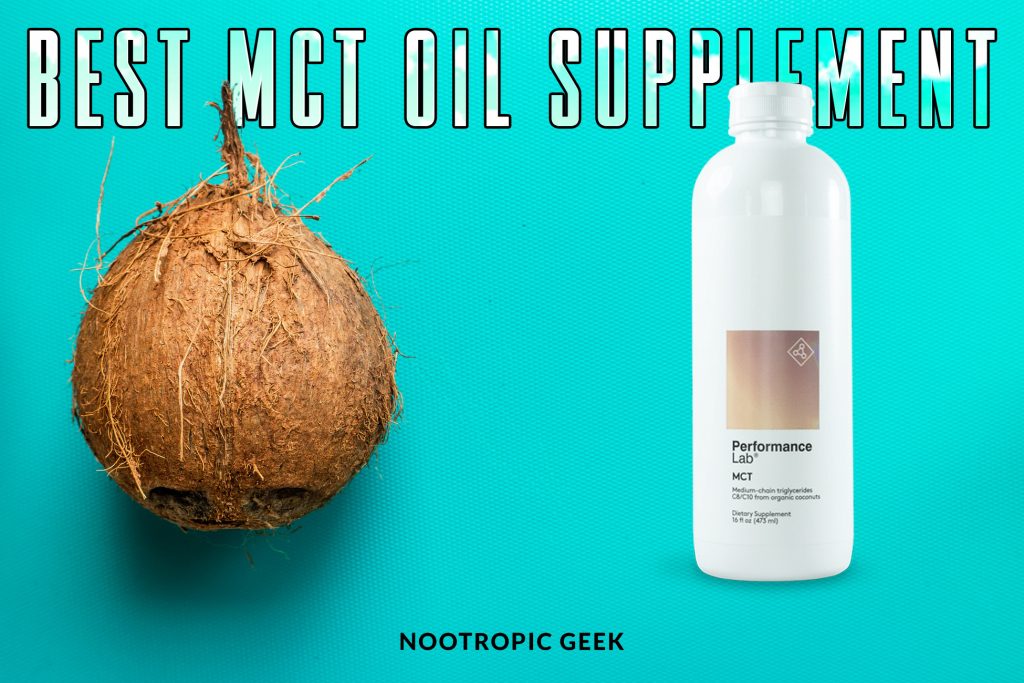
The Performance Lab manufacturer page describes its MCT product as C8+C10 oil. That identifies the product’s positioning; it does not establish superiority over all alternatives. This category guide does not certify a current price, inventory or universal best brand.
A product-specific review should examine the exact label and serving, source documentation, packaging and cost. Do not transfer an older formula description to a new bottle without checking.
What to compare before buying
- Declared composition and serving size.
- Calories and other ingredients, especially in powders or flavoured products.
- Storage instructions and practical packaging.
- Cost per comparable amount, including shipping.
- Tolerability and whether the product serves a defined dietary purpose.
Follow the label rather than escalating intake to chase mental energy. Persistent symptoms or a medical dietary goal warrant individualized advice. A useful MCT purchase need not come with a promise of improved intelligence.