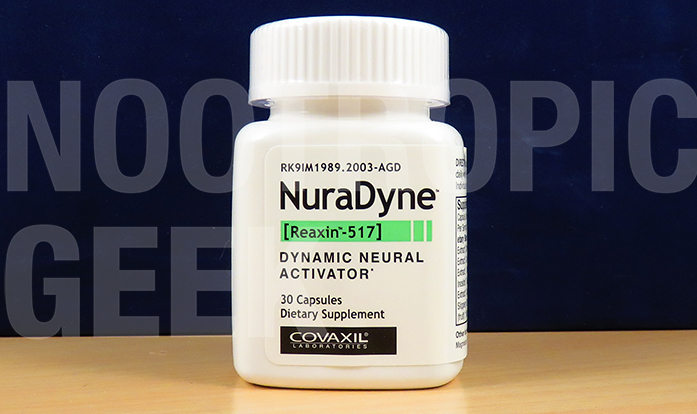
NuraDyne’s earlier formula combined several botanical caffeine sources in a 594 mg blend. The record does not verify a total caffeine amount or establish treatment benefits.
This review examines the formula recorded in our earlier coverage. The archived amounts below are not confirmation of the label, stock, price or purchase terms available today. This editorial revision does not report a new personal trial or laboratory test.
Page Contents
What is distinctive about this blend?
The archived list combines bacopa with coffee bean, guarana, cola and green tea, followed by rhodiola and several other botanicals. It also specifies Rhodiola crenulata, which should not be silently replaced with Rhodiola rosea when discussing research. These details matter more than the number of plant names on the label.
Formula recorded in the earlier review
The table preserves the earlier ingredient record for comparison, with obsolete Daily Value percentages omitted. Use the current pack label for a purchase decision. These are recorded label amounts, not dosing instructions.
NuraDyne Ingredients | |
| Ingredients | Amount Per Serving |
| Niacin | 25 mg |
| Proprietary Blend | 594 mg |
| Bacopa (whole plant) Extract | ** |
| Coffee (bean) Extract | ** |
| Guarana (seed) Extract | ** |
| Cola (seed) Extract | ** |
| Green Tea (leaf) Extract | ** |
| Rhodiola crenulata (root) Extract | ** |
| Inositol | ** |
| Glucuronolactone | ** |
| Cinnamon (bark) Extract | ** |
| Cayenne (fruit) | ** |
| Marshmallow (root) | ** |
| Melon (fruit juice) | ** |
| Jujube (fruit) | ** |
Why the old caffeine estimate is not reliable
The earlier article quoted a caffeine figure from a retailer question-and-answer exchange. That is not a verified current manufacturer label. With multiple caffeine-containing plants and no disclosed amount for each, the table alone cannot establish total caffeine exposure.
Dividing 594 mg across the listed ingredients would not solve the problem. Proprietary blends are not necessarily divided into equal portions, and extract concentrations differ. Both a claim of a precise caffeine amount and a claim that the blend is necessarily ineffective would go beyond this record.
Species and extract details affect interpretation
Studies of Rhodiola rosea cannot automatically validate a product listing Rhodiola crenulata. Similarly, a bacopa name without a matching extract specification and quantity does not identify the material used in a particular trial. The archived table is a starting point for questions, not a clinical certificate.
Cinnamon, cayenne, marshmallow, melon and jujube add variety to the list but do not collectively prove improved memory, stress relief or sustained concentration. Those outcomes would need evidence for the actual mixture.
Who should not rely on the old recommendation?
The previous article broadly recommended NuraDyne to students and athletes and described natural ingredients as inherently safe. That wording was not justified. Unknown caffeine exposure is particularly relevant to people sensitive to stimulants or already using caffeine-containing products. Current label warnings and individual medication advice are needed.
Editorial assessment
The key unresolved issues are caffeine disclosure, species identity and individual quantities. The archived NuraDyne formula does not support a universal recommendation, and old retailer availability or refund details should not guide a current purchase.
Sources checked
For the review method and commercial relationships, see Nootropic Geek’s editorial standards.